A long overdue post I started writing last summer…
It’s summer in Istanbul. Perhaps it’s an anomaly, but so far early July feels more bearable than mid-June, in terms of the heat. Having experienced many typical Manchester summers of 14 degrees Celsius and rain (the appeal of which suddenly became apparent last month), I am still amazed that I can safely leave my umbrella at home and enjoy the splendid sunshine in a sleeveless dress. But sometimes, even the greatest admirers of the city can begin to find it tiring, especially when hot. And this is when you can escape to the Princes’ Islands.
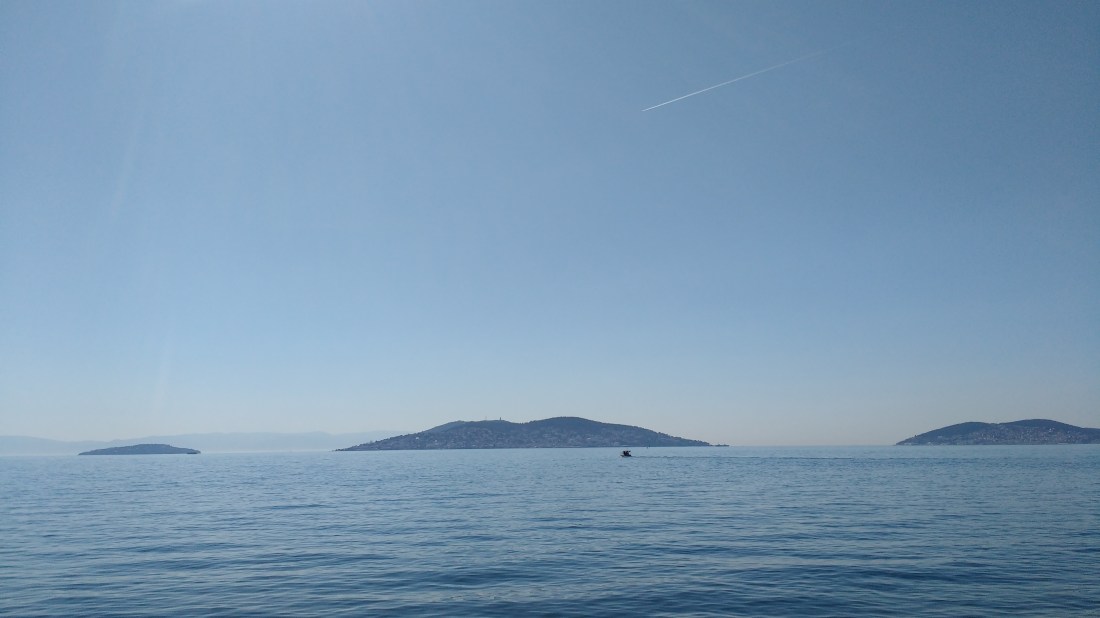
The Princes’ Islands are situated in the sea of Marmara, south-west of Istanbul’s Asian shore. Getting there is not too hard: just jump on a ferry in Kabataş, Eminonu, Kadikoy or Bostancı. The total journey time to the biggest of the islands, Büyükada, is 1:50 h, 1:30 h , 1:10 h or 40 minutes respectively. If possible at all, it’s a good idea to plan your island get-away for a weekday; on weekends, the ferries get really busy and you may end up standing for some of the journey.
The ferries of the state-run company, Şehir Hatlari, will stop at the three other islands before getting to the biggest one, Büyükada.
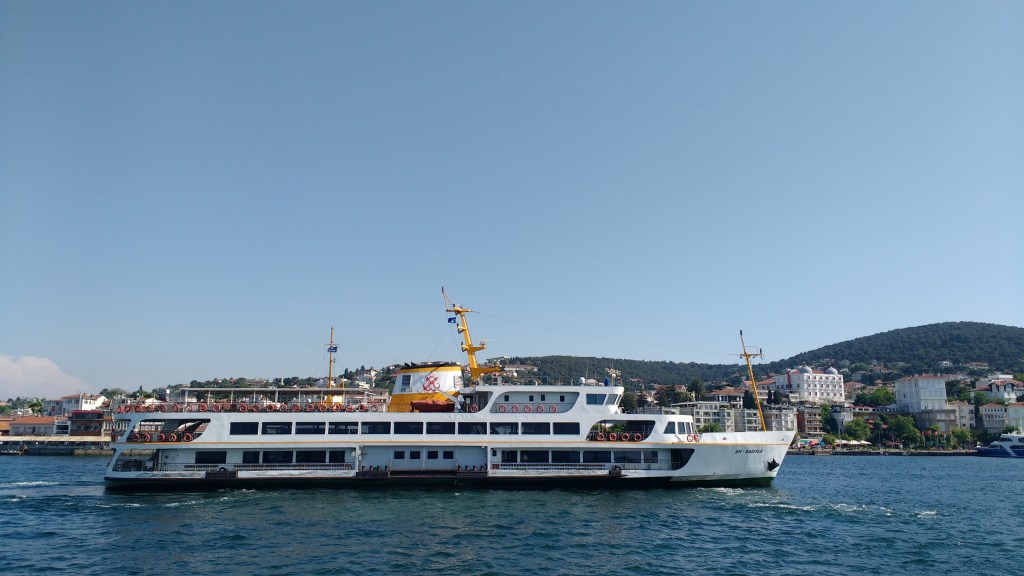
On the ferry
If you are looking for an exotic experience, the ferry journey is likely to be just what you need. Run ahead of the crowd to find the best seat on the top deck, in the shade. The ferry catering staff may come around to offer tea or snacks. Once the ferry is off, the show is on.
The simit seller will appear, confidently holding a wooden or metal tray full of simit – Turkish bagels – on his head, singing the praises of the freshness of the stone-oven baked wonders. He will manage to balance his tray in a truly remarkable way, completely hands-free, giving up on his potential customers, engrossed in a telephone conversation. I feared a sudden jolt of the ferry might have me covered in simit from head to toe, but he was clearly a professional and that didn’t happen.
The simit seller will be followed by the far more entertaining juice squeezer presenter. He will have a few lemons and oranges on hand, along with some plastic devices that look like minuscule jugs with a corkscrew at the bottom and an equally minuscule plastic lid on top. You can easily screw them into a soft citrus fruit and he’ll show you exactly how to do it in order to extract the maximum juice and minimise waste. Amidst applause, he’ll pour the so-produced juice in a tulip-shaped glass, sometimes mixing lemon and orange, and will offer it to a thirsty passenger. This marvelous invention is sold in packet of 3 and the going rate is 10 lira a packet. Don’t worry, I have enough. No stress, I am coming! Money will quickly change hands, the applause will subside, and the man in question will leave the stage to the next performer, the kitchen shredder presenter.
The shredder looks very much like a shaving razor. You will be shown how to use the device to cut wafer-thin slices of potatoes for your chips. Cabbage, red or white, will be shredded in seconds. The culmination of the show is removing the outside of a stubborn pineapple in – what feels like – less than a minute. You can acquire this wonder of kitchen utensils at the irresistible price of 20 liras for a packet of two. No more hassle in the kitchen. It’s gotta be worth it.
What princes? Some etymology
The Princes’ Islands were not always so desirable a destination. Some Byzantine princes ended up in exile here, removed from the city to prevent family feuds and claims to the throne; hence the English name. The Turkish is just Islands – Adalar. Four of the islands are inhabited. The smallest is Kınılada, from the colour of the soil, which resembles that of cinnamon, canella. Then we have Heybeliada, Burgazada and Büyükada, the last meaning just the big island. The Greek name of Büyükada is / was Prinkipo.
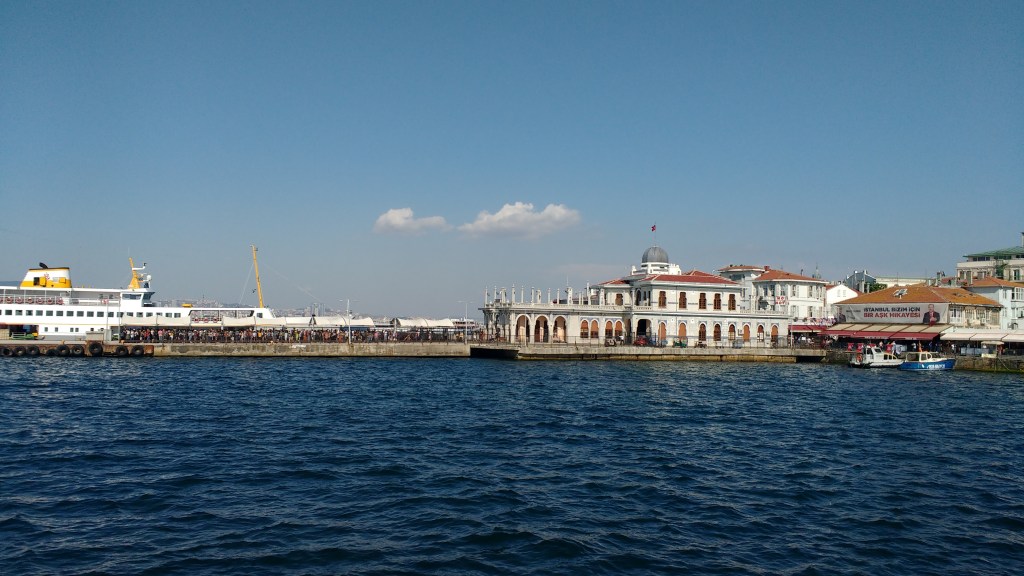
The approach towards Büyükada will give a keen photographer plenty of opportunities for good shots. Do not miss the incredible building of the ferry terminal itself. It has many beautiful decorative tiles and the name of the island is written in old Turkish script.
The Princes’ Islands on a bicycle? I don’t think so.
Once on the island, do not give in to the tantalising thought of renting a bike. I am reading the following in my guide book: Cycling is very popular and an ideal way to get around these small islands… Sure, you whizz down a hill, the wind in your hair, what’s not to like? Oh yeah – you’ve got to get up that hill, too. I have seen it, and even done it. On my first visit to Istanbul I got to Heybeliada, got on a bike… and ended up carrying it some really steep hills that require mamooth pedalling power. The islands are quite hilly and it is fair to say that the enjoyment of your visit can be significantly reduced by the weight of a bike you cannot just abandon in the wilderness (you’ll need to leave your ID as a form of security when renting), as tempting as that idea may be. So: whatever you do, don’t get on a bike!
The centre and the Büyükada mermaid. Various mansions
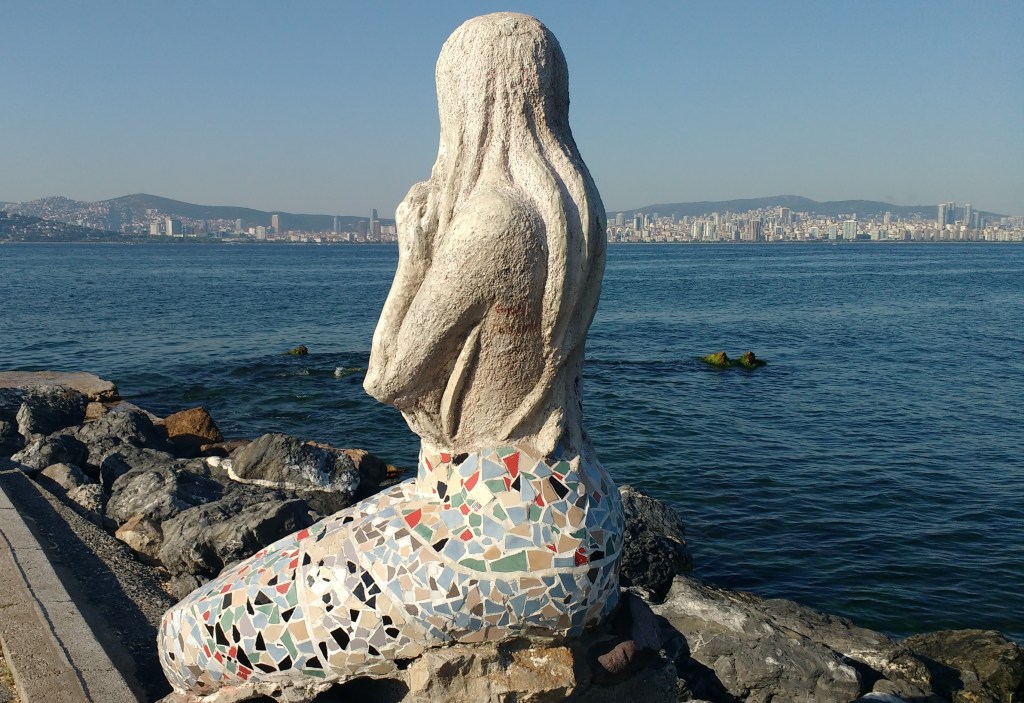
Büyükada has a pretty little centre with the usual fish restaurants, ice cream shops and a seaside promenade. If you turn left at the ferry terminal and walk by the seaside, you will get to a statue of a mermaid. Some friends, who have seen the Kopenhagen mermaid, confessed to me that they prefer the one in Büyükada.
There is a street that runs parallel to the seaside promenade, where you’ll find a nice little bakery with good tea, milk pudding and reasonable prices. There are a couple of paid beaches. Attention, gents: you may not be allowed on these unless accompanied by a lady. This is the case whenever you see the sign: Damsız girilmez.
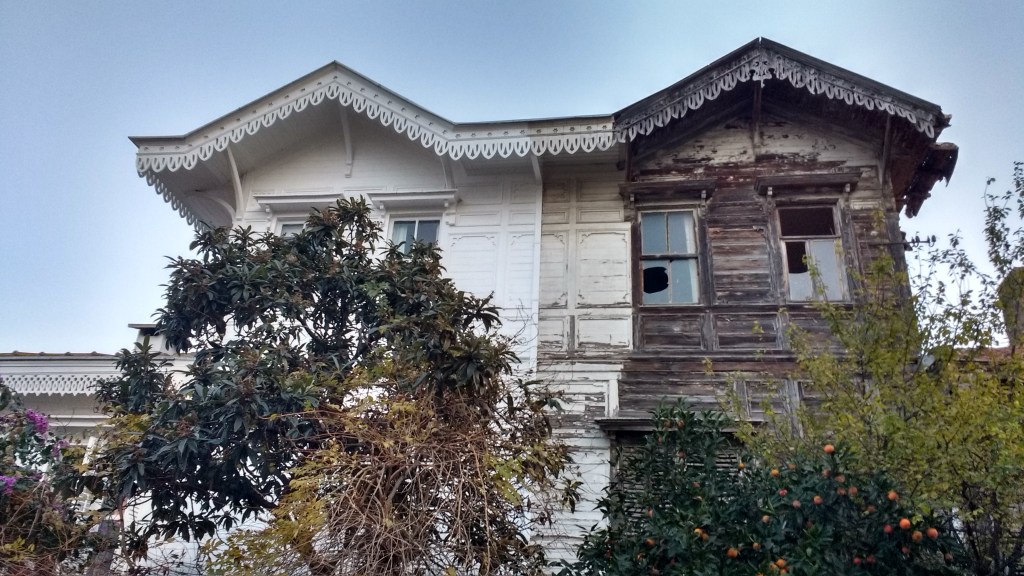
The islands weren’t of much interest to the Ottomans. The communities that settled here were mostly Greek and Armenian. In more recent times, when Pera, today’s Beyoğlu, was a thriving trade centre, many of the merchants choose to build houses on the islands. You can see these beautiful, ornate villas resembling palaces, all over the islands; some – beautifully restored; some, sadly, abandoned, perhaps as a result of inheritance disputes, falling apart, their windows broken, the wood structure giving in to the elements. This photo encapsulates it all:
One building that’s definitely worth mentioning is the Büyükada Splendid Palace hotel. It really is quite a something:
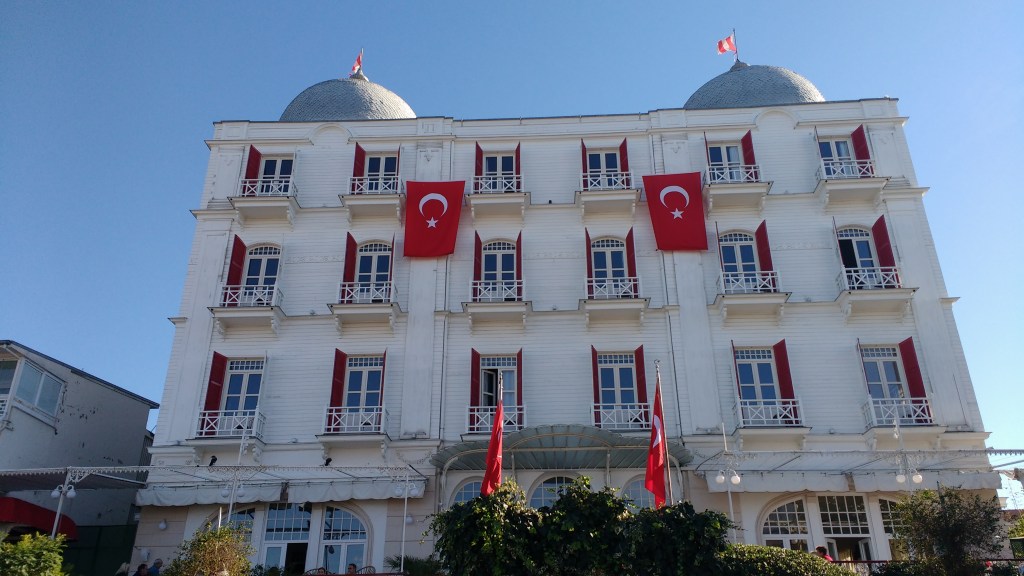
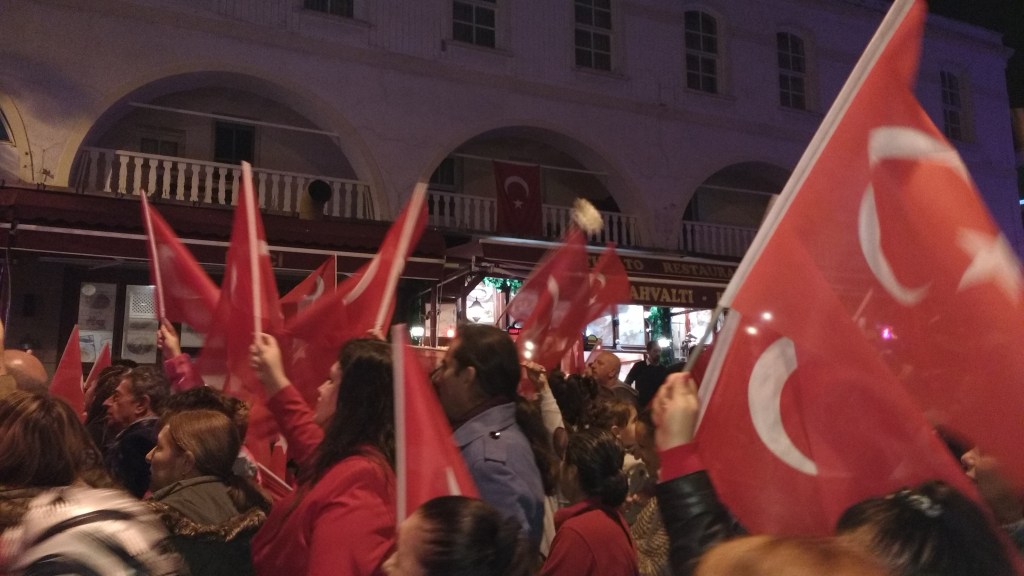
This picture was taken on the Turkish Day of the Republic, the 29th October – hence the Turkish flags. There was an animated… I hesitate between the words manifestation, procession and march that day, to mark the occasion:
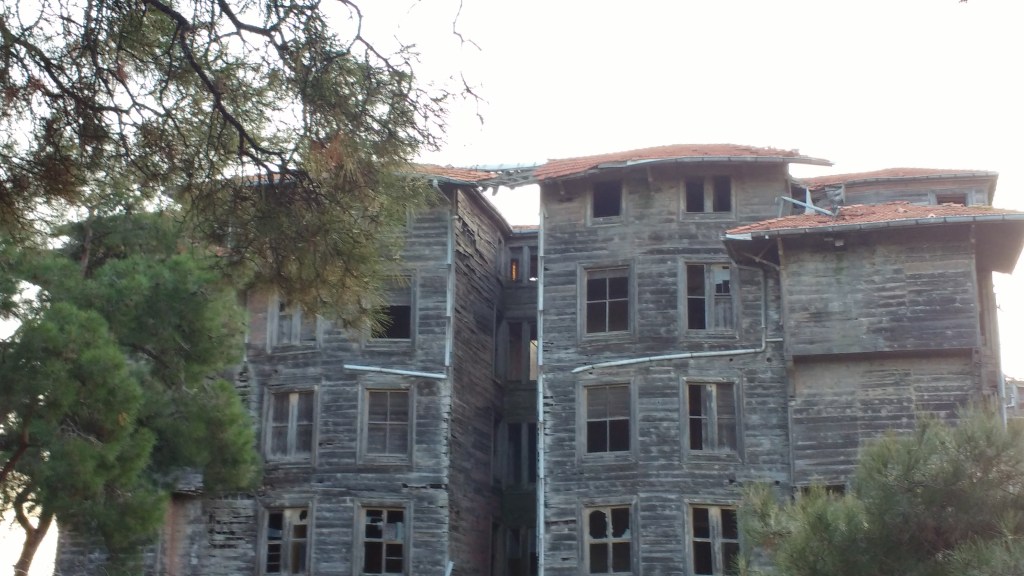
Second largest wooden structure in the world?
For such a small island, Büyükada has got lots to offer. You should find your way to the old Greek orphanage. The building was built by the same company that ran the famous Orient Express and was initially meant to be a hotel with a casino. The then-sultan didn’t warm to the idea of gambling going on on (almost) his doorstep. The building stood unused for a time and was eventually sold to a Greek lady, who donated it to the Greek Patriarchate in Istanbul, on the condition that it be used as an orphanage. The orphanage closed in the second half of the 20th century, due to the rising tensions between Greece and Turkey and the lack of funds. There are claims that the building is the second-largest wooden structure in the world. It is currently fenced off for security reasons, but one can still get a feeling of its former glory.
A church with a story
St. George’s church, or Aya Yorgi Klisesi, rises proudly above Büyükada from a fairly steep hill (tepe in Turkish). The church was built on the site of an ancient monastery that was mentioned in records over 1000 years ago! The monks are thought to have left the monastery, orginally built in 963 AD, following pirate attacks in either the 13th or 14th century. They are said to have burried the icon of St. George in the ground, in the hope to save it from being robbed. Legend has it that the icon was discovered by a shepherd; he had seen St. George in a dream, urging him to climb the nearby hill and start digging where he should hear ‘bells ring’. The monastery was re-established in the 1750s and the church itself dates back to this time. The monastery suffered extensive damages in subsequent earthquakes and fires. Currently, only the church remains, the only building to have stood the test of time. It is open to visitors; be there before 4 pm to make sure you see the spectacular interior.
Getting to the church will require at least half an hour of vigorous climbing. There are benches here and there on the way to let you get some rest. Attention, ladies: this road does not lend itself particularly well to high heels. Sports shoes or hiking boots are recommended. The views on the way and at the top will more than make up for your efforts:
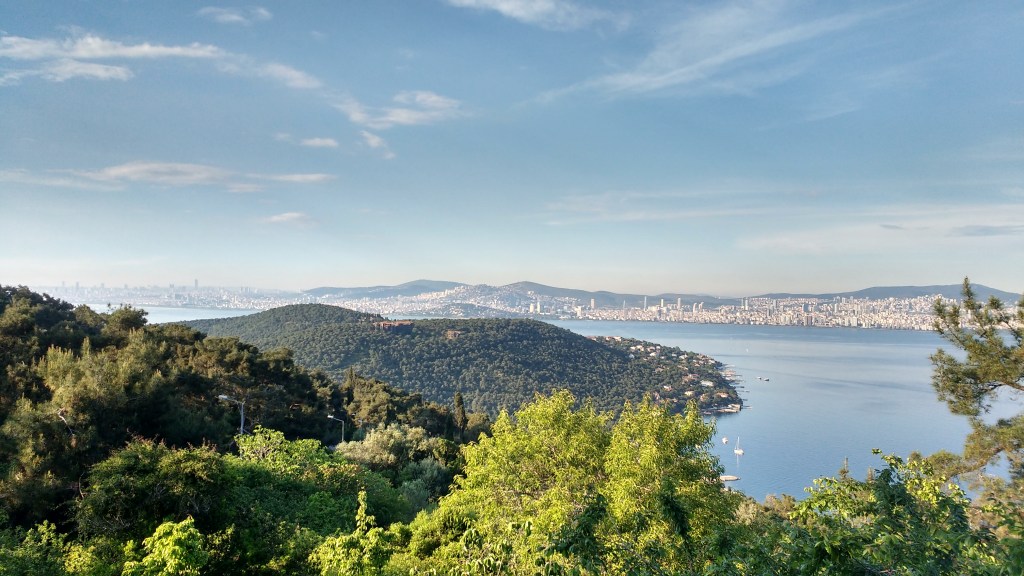
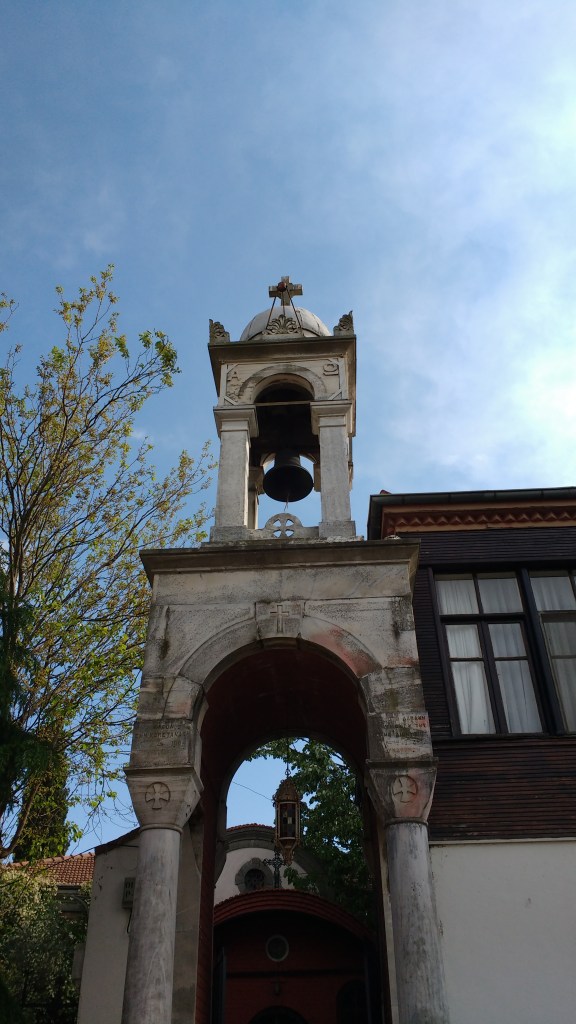
It is a tradition for Orthodox Christians to visit the church on the 23rd April each year – St. George’s day. They bring some thread that they tie to the trees leading up to the hill or surrounding the church and make a wish. You will see many trees covered in thread of all colours. Some pilgrims also attach hand-written pleas to the saint.
Glorious food
If you need additional encouragement to tackle the hill in question, just think of food. Right next to the church there is a self-service restaurant, which serves unbelievable meatballs. And not only this: fried aubergine, potato chips, cucumber and tomato salad and – in season – watermelon, all at affordable prices. If there were nothing on Büyükada save the meatballs, I’d still go and climb that hill, with the sole purpose of enjoying this deliciousness.
And then, there’s the view:
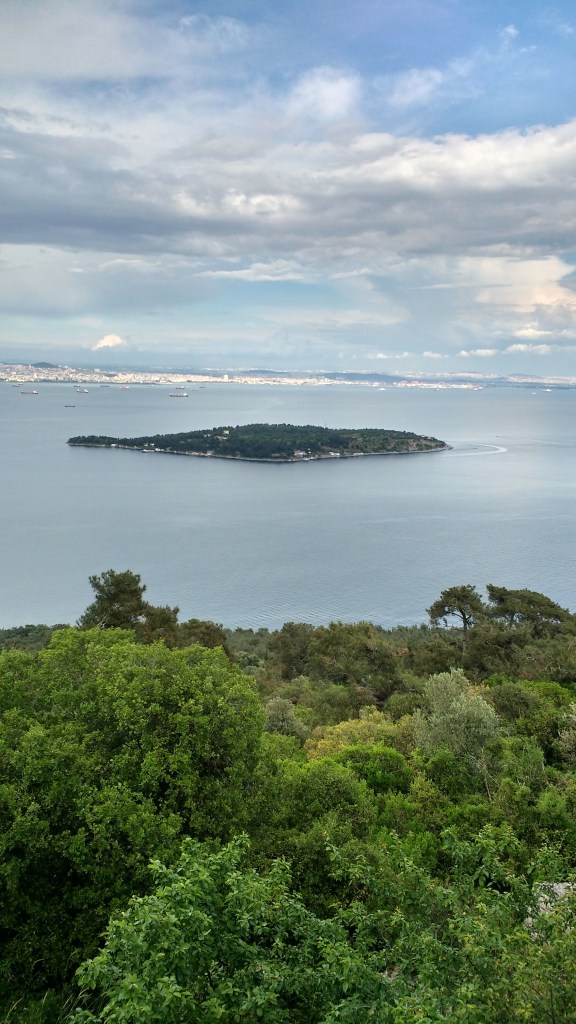
Nature
A trip to the islands will give you a chance to enjoy nature without the constant roar of cars and other vehicles. There is a road that encircles the island and will lead you to its natural parks. Take in the fresh, pine-scented air and more amazing views:
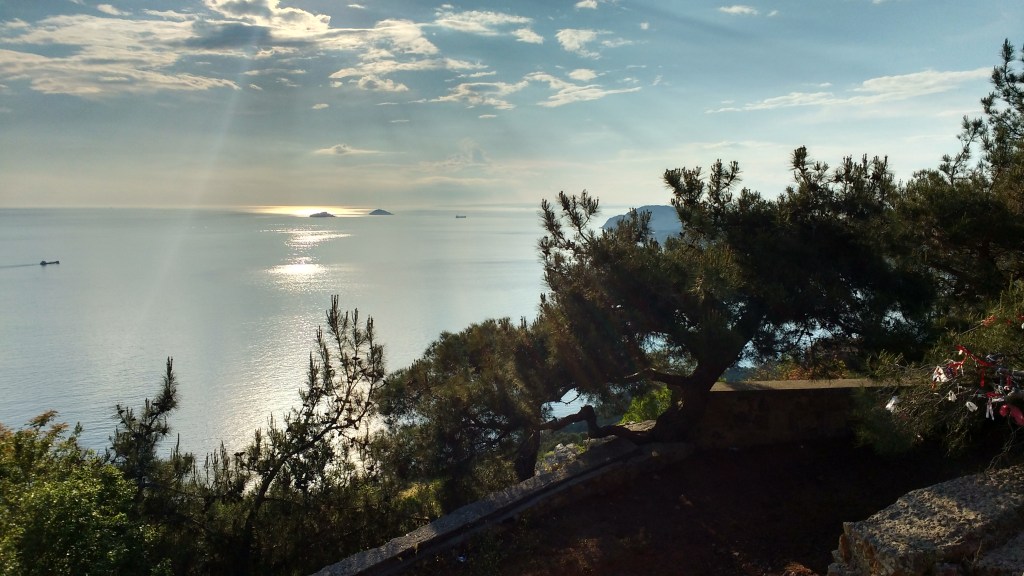
Horse & carriage
Currently, visitors to the island can rent a horse-drawn carriage. However, this will only be possible for the next few months as the municipality of Greater Istanbul is in the process of banning the carriages. Although many have mixed feelings about the carriages and there are claims that the animals are mistreated, I feel for the people who will lose their livelihood and hope they can find another form of employment.
And a lot more…
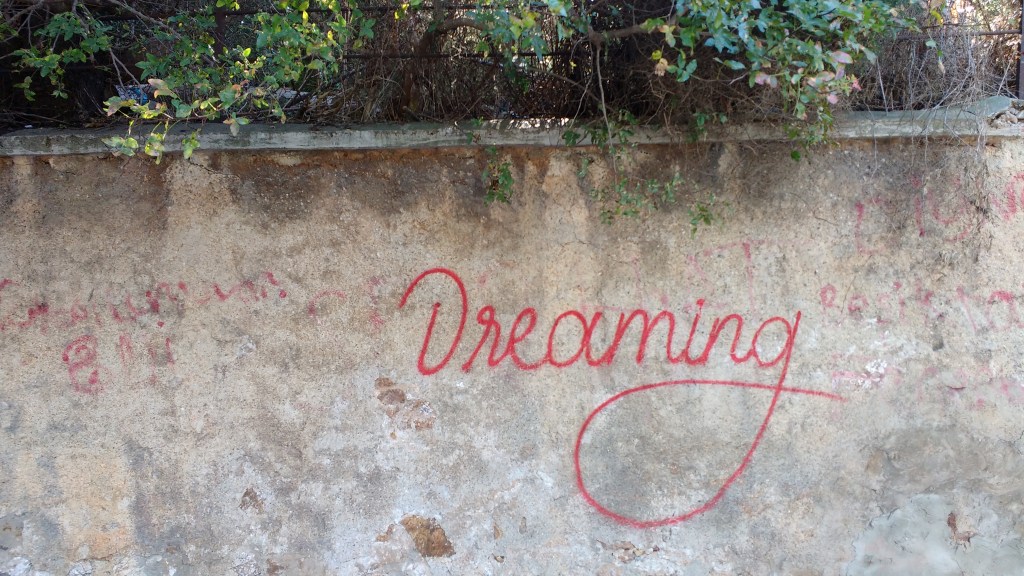
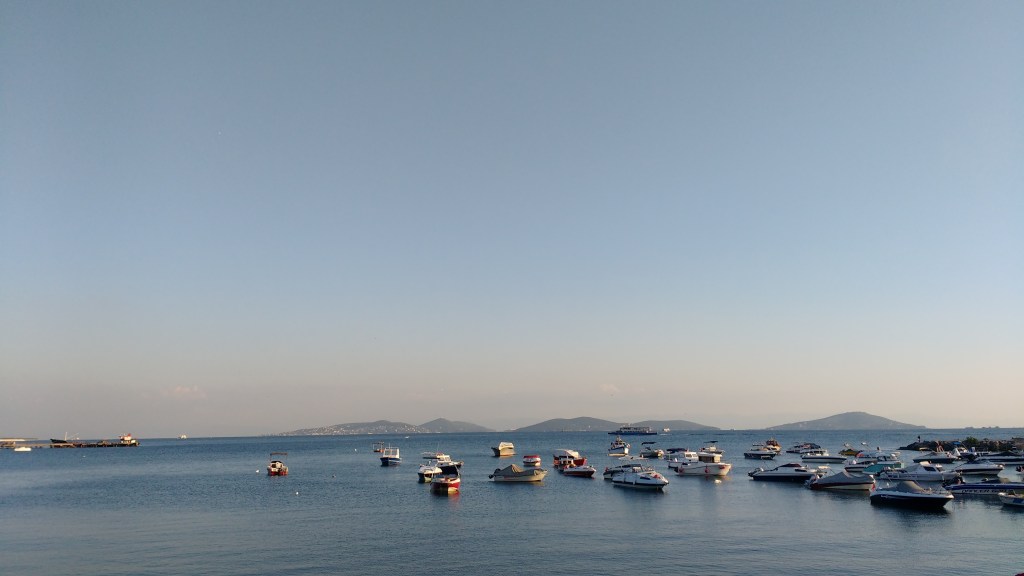
Despite all my visits to Büyükada, I am yet to see the Monastery of St. Nicholas, also located on the island, the Museum of the Princes Islands and the house of famous Russian revolutionary Leon Trotsky. So much history and beauty in one place, on one tiny island! I leave you with this artistic grafitti and with yet another picture of the islands…

 Purple Travel Path
Great post 🙂
LikeLiked by 1 person
Thank you! 🙂
LikeLike