Let’s turn the clock back some 49 years and imagine it’s 1970. You are a young person who wears loose clothes that never match; some with flowery patterns. You have read Kerouac and have heard about The Beatles’ 1968 trip to Rishikesh in India. You, too, want to learn to meditate; you, too, want to find nirvana. Or, perhaps, you’ve just had enough of studying and long for an adventure. What do you do? Naturally – you decide to set off on an overland journey to India, which brings you to Istanbul and more precisely – to the Pudding Shop.
Today, I was strolling down Divan Yolu, a major thoroughfare in Sultanahmet, the historic penninsula of Istanbul, when this poster caught my eye:
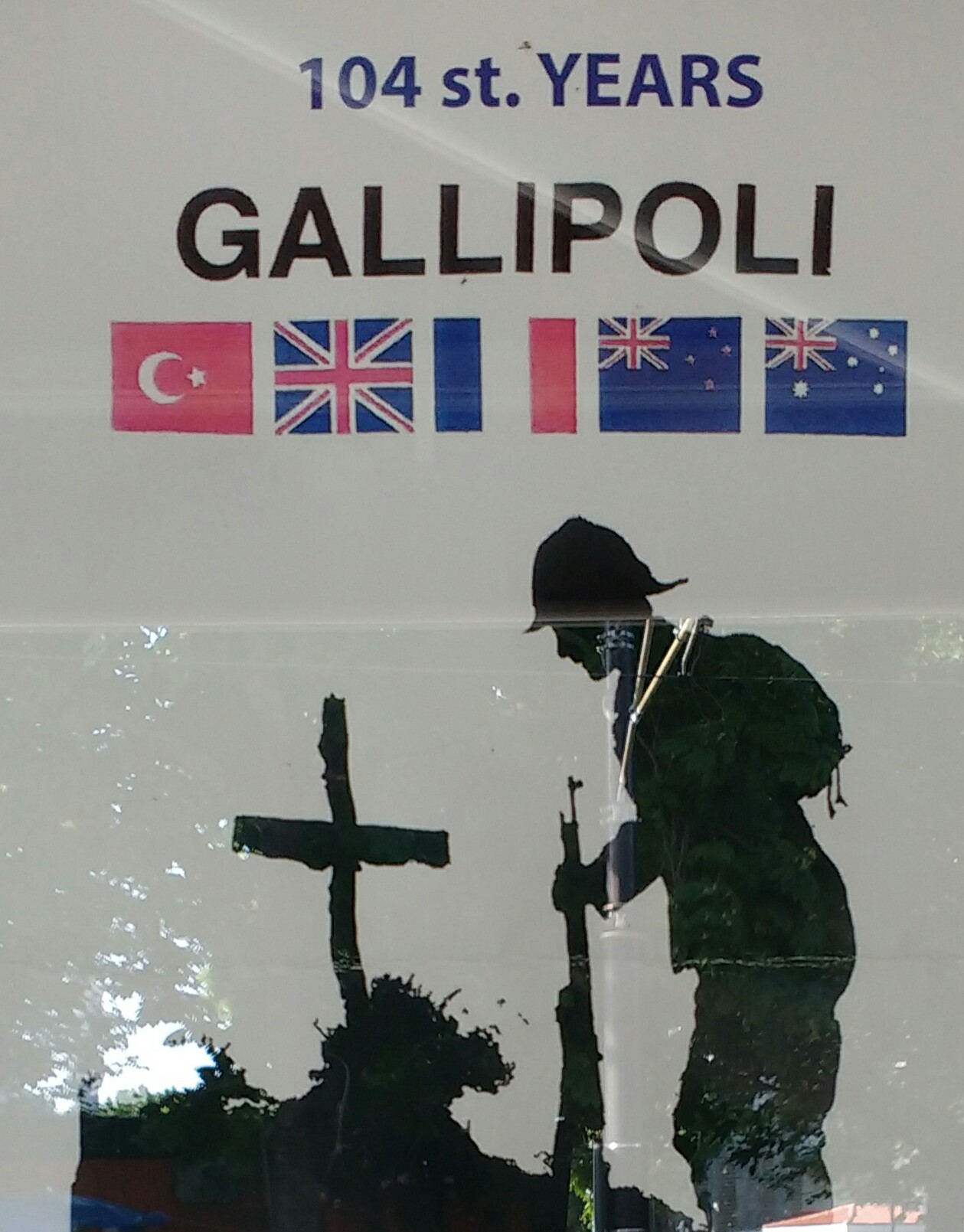
Below the picture, the following was written:
Those heros that shed their blood and lost their lives… You are now lying in the soil of a friendly country, so rest in peace. There is no difference between the Johnnies and the Mehmets to us. Having lost their lives in this land, they have become our sons, too.
Moved by the words of the great man, Mustafa Kemal Atatürk, I looked up. What was this place? And there it was:
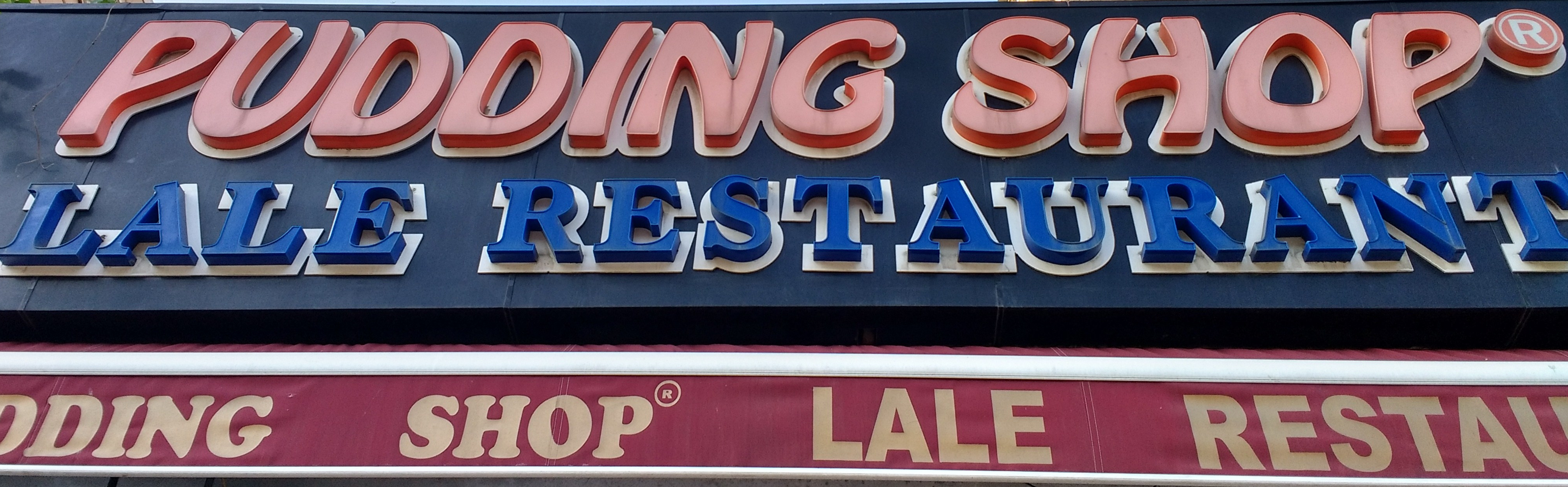
I had read about the Pudding Shop in my guide book, but wasn’t really planning to visit. In fact, I had gone to see the Carpet museum (Oh, yes, there is such a thing!) nearby. But now, I had to go in.
The Pudding Shop, or rather, the Lale restaurant (Tulip restaurant) opened in this location in 1957 and is still run by the same family. Back in the late 1960s – early 1970s, there were many young backpackers in the city, who were trying to make travel arrangements for the continuation of their journey to India or Nepal. The owners of the restautant came up with a genius idea: they put up a bulletin board where travellers could post messages to prospective or delayed companions. This proved a hit: the Pudding Shop drew crowds. Business was booming, with baked rise pudding (sütlac) and chocolate pudding particulary popular.
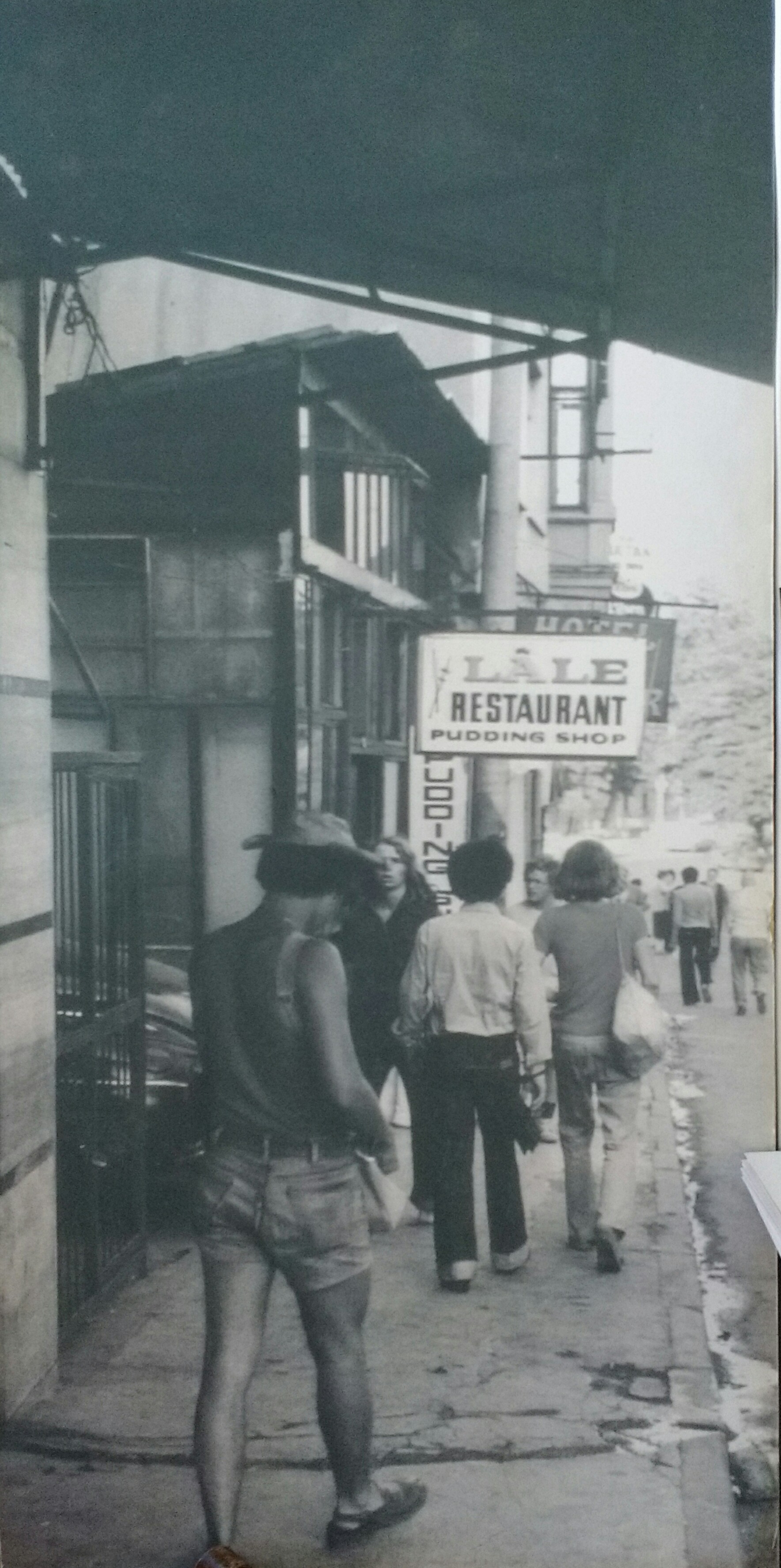
Image courtesy of The Pudding Shop
I spent a considerable amount of time looking at the various exerpts of foreign newspaper articles about the shop. This one was by far my favourite:
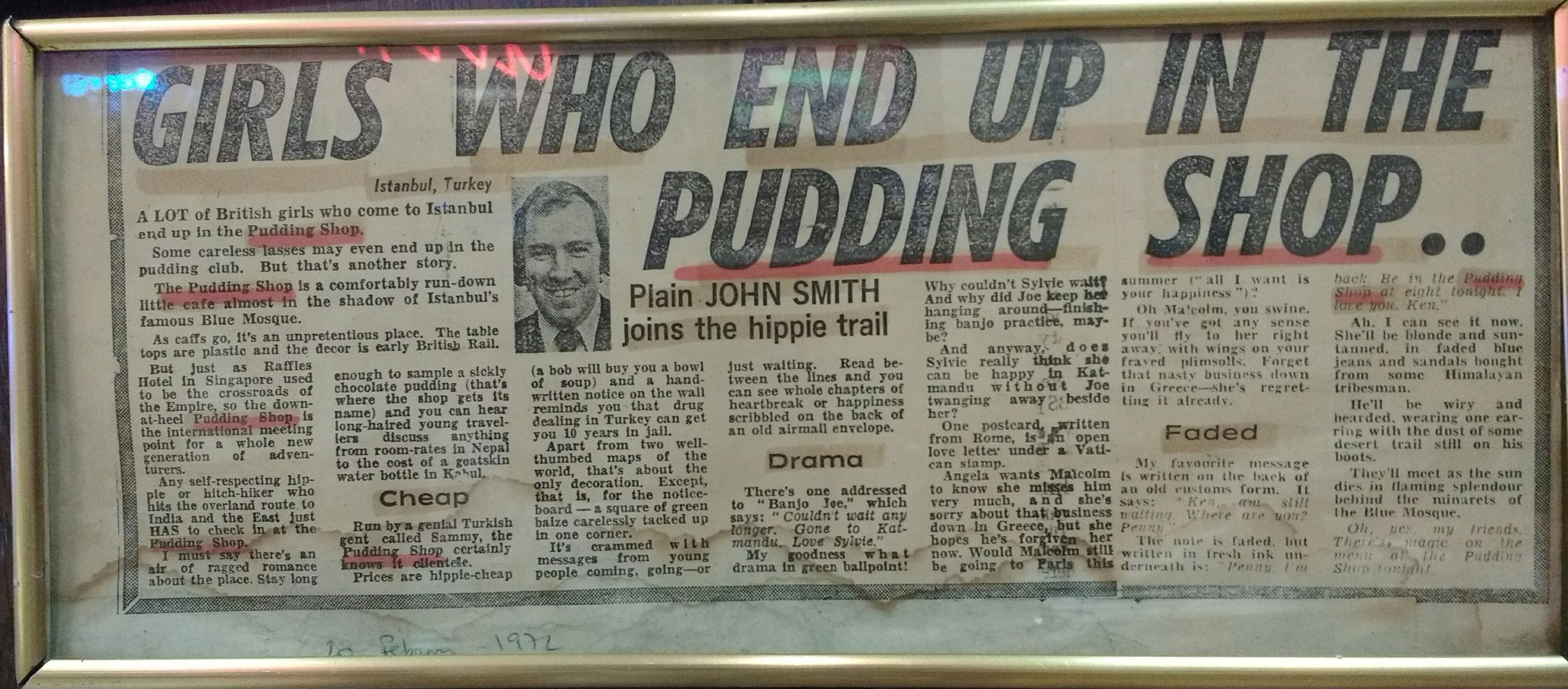
I tried, in vain, to find the obviously British newspaper that this article, dated February 1972, if we can trust the faint handwriting in pencil at the bottom, came from. The author, John Smith, describes the decor of the cafe as early British rail and then writes about some of the messages he’d read. We get a glimpse of three love stories of young people who had met on the Hippie Trail, written in a light-hearted manner, revealing the author’s great sense of humour. If you’re able to zoom in the photo, do read this article – I thought it was great!
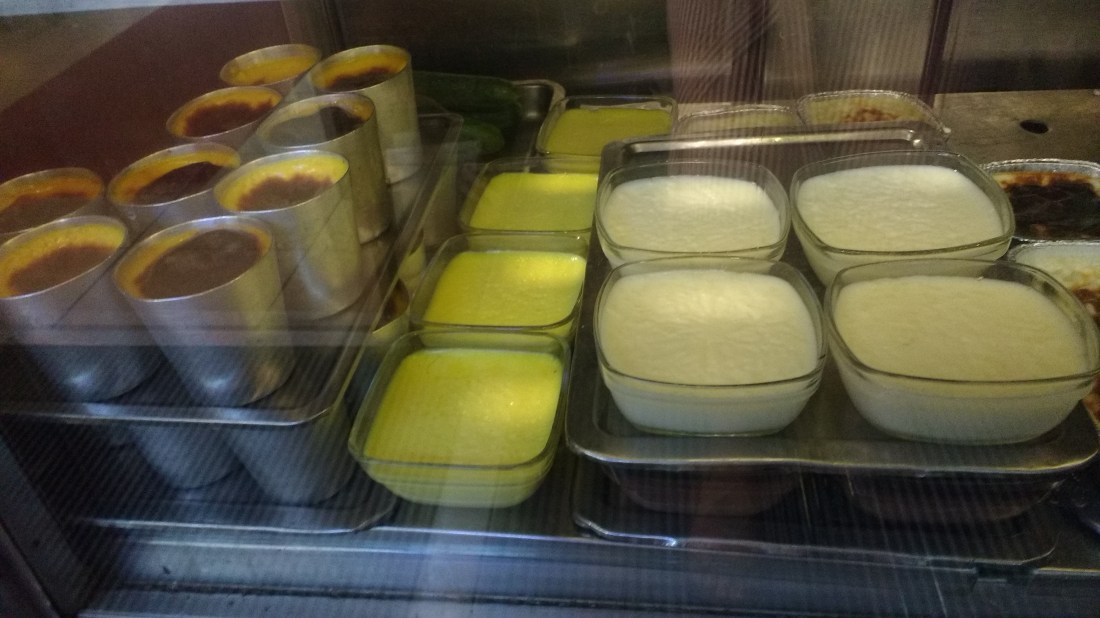
I hung about for a while and eventually decided to have some food. Now, Sultanahmet meatballs are world-famous, too. (I am thinking of Sultahahmet Koftecisi in Rusholme, Manchester.) So, this was the obvious choice. A decent meal. I had to forego pudding as I had had it before lunch – I sometimes do this, which I think can be described as eating in reverse chronological order. However, plenty of puddings were available:
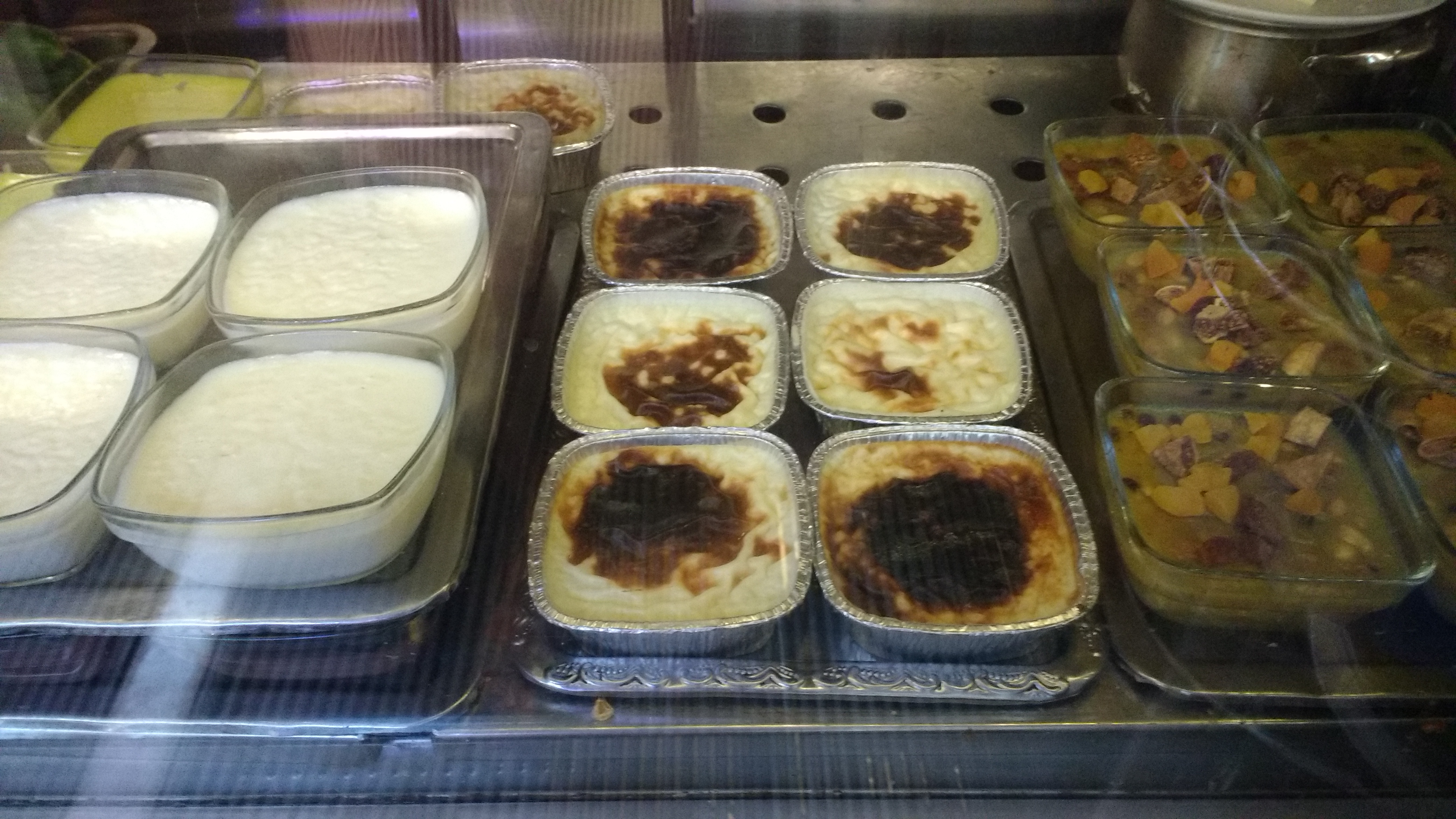
Now, an article about The Pudding Shop just wouldn’t be complete without a word about Turkish puddings. In Turkey, milk-based puddings are common: sütlac (baked milk and rise pudding), keşkul (milk custard pudding topped with finely chooped almonds and coconut shreds), kazandibi. Here is how I came across the last one:
I was in the area of Saryier, up north on the European side of the Bosphorus. I saw a restaurant and entered to examine the available sustanance options. Some strange-looking desserts were on display. I asked: What’s in this? The answer: Milk, sugar, chicken. Chicken?!!? – said I. Yes, chicken! – nodded the staff. I thought for a moment. Not your typical dessert ingredient, but I decided to try it. No chicken was detectable in the taste. The texture did have a fibery chicken breast structure about it. It was tasty, but I haven’t had it since. I guess that the idea of using chicken breast in desserts takes some getting used to. (N.B. There is another similar dessert – tavukgöğsü.)
Finally, we have the king of Turkish desserts – aşure. It is made in the month following the Sacrifice Feast (Kurban Bayrami), from pulses, dried fruit and nuts. Legend has it that it was made by Noah, who threw whatever ingredients he had left on the arc into one pot. Aşure was the end result. Today, it is a symbol of diversity, friendship and unity. It is made in large amounts and shared with friends and neighbours.
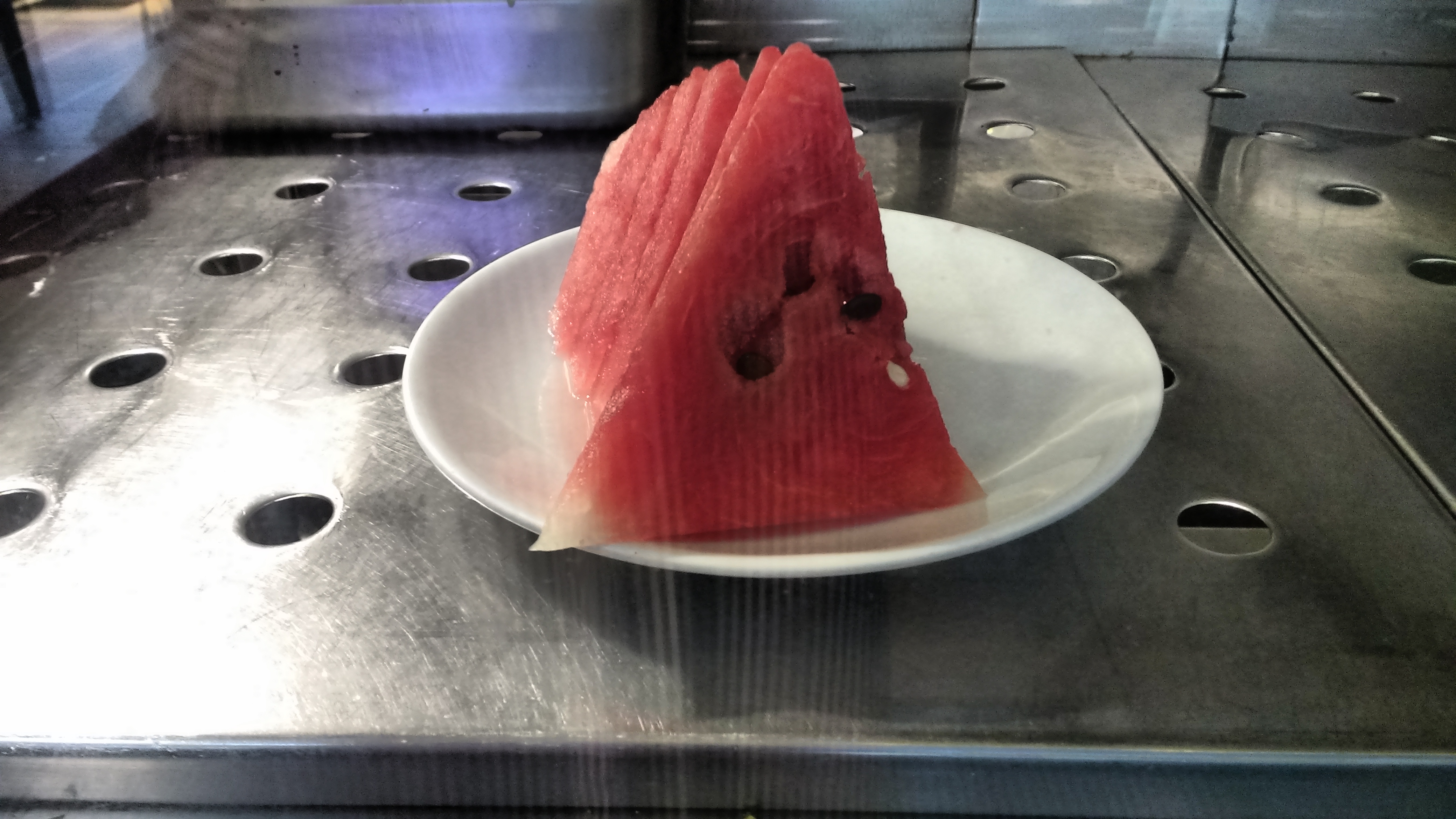
Other, more traditional deserts are also available in The Pudding Shop. Think baklava, mosaic cake, cheesecake. In season, there is also a lighter option:
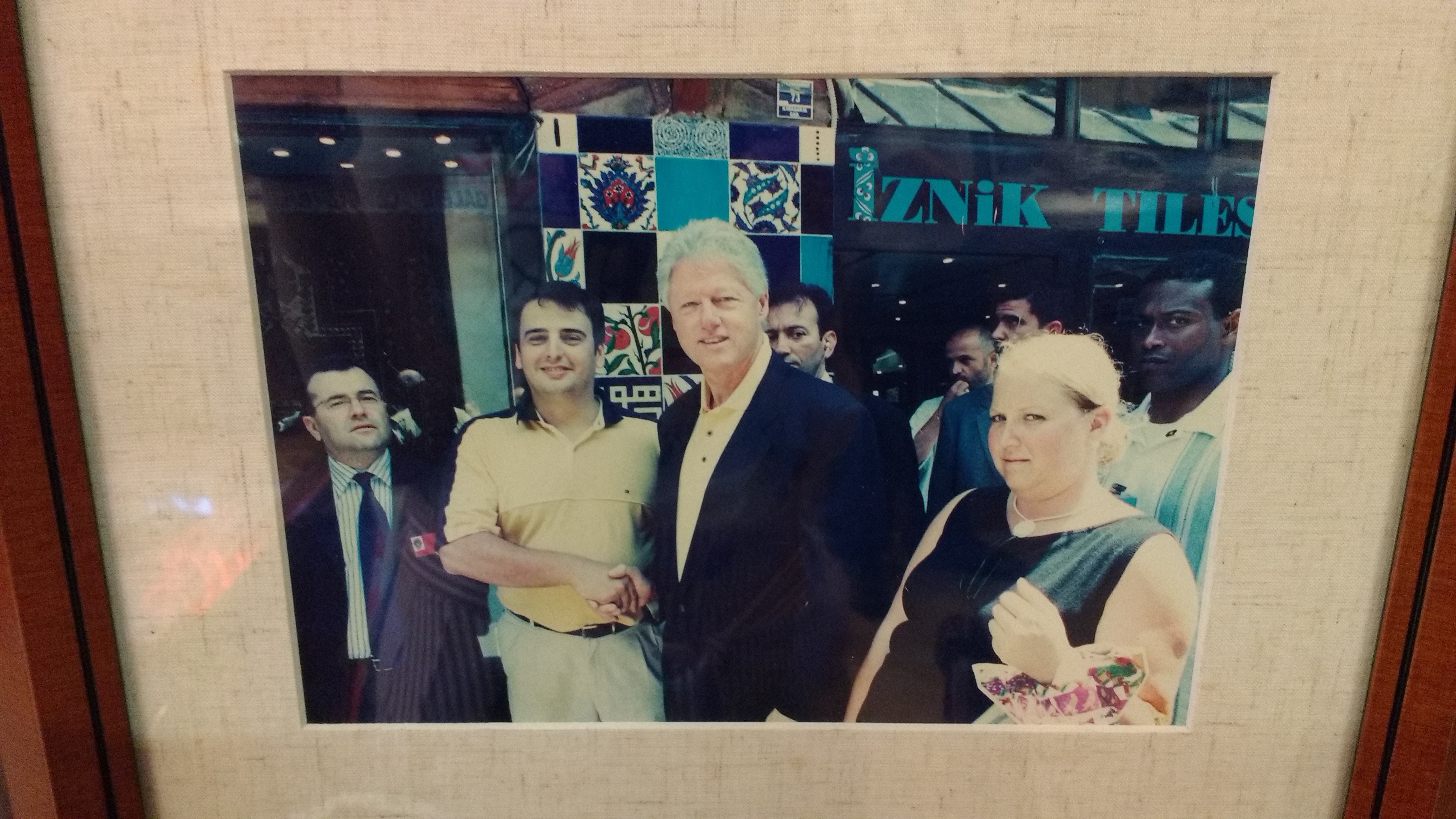
To wrap up, I will just add that I wasn’t the only famous person to have eaten in the Pudding Shop:
And now, really wrapping up… I looked all over shop for the 40-something years old bulletin board from the times of the Hippie Trail. The original had gone, but a new one, with a fair few messages, was hanging on a wall on the right side of the entrance. I read some of the messages: most were quite recent reviews of the restaurant, or reasons why people visited. I couldn’t resist the urge to write my own message. The friendly staff provided me with paper, pen and sticky tape. It is somewhere in this photo:
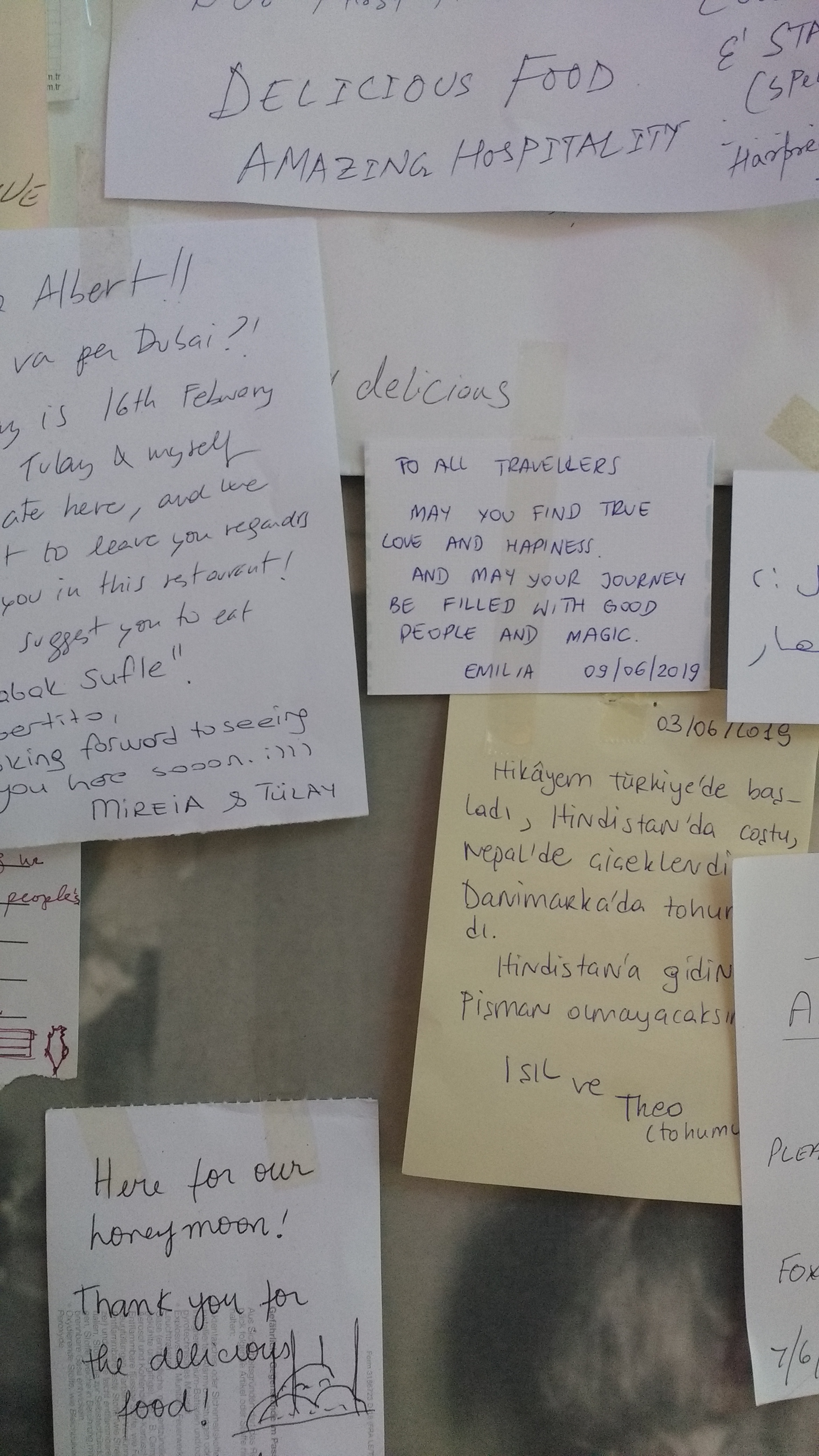
Times may have changed, but The Pudding Shop still stands. And it’s special. Do stop by, if you get the chance, for that bittersweeet taste of nostalgia and pudding.
Photos / newspaper article: No copyright infringement intended. Credits can be added if necessary.

 Purple Travel Path
You just did it for me, in early 1972 I found a note on the Pudding shop message board for a “Magic” bus heading to Pakistan to pick up passengers stranded by the war with India. I boarded that bus the next day, paid my $15 or $18 and became a member of a group of starry eyed nomads for the next 5 days. I left the bus in Herat to catch my breath, and the only other passenger I remember is Tec Chamberlain who played a memorable role in my odyssey over the next few years.
LikeLike
Thank you for your comment! I wish I had been there back in the day, it must have been special. All the best!
LikeLike
If you’d like to share the story of how meeting Tec Chamberlain changed your life, you’re welcome to do so 😉
LikeLike
He will appear in a later post.
LikeLike