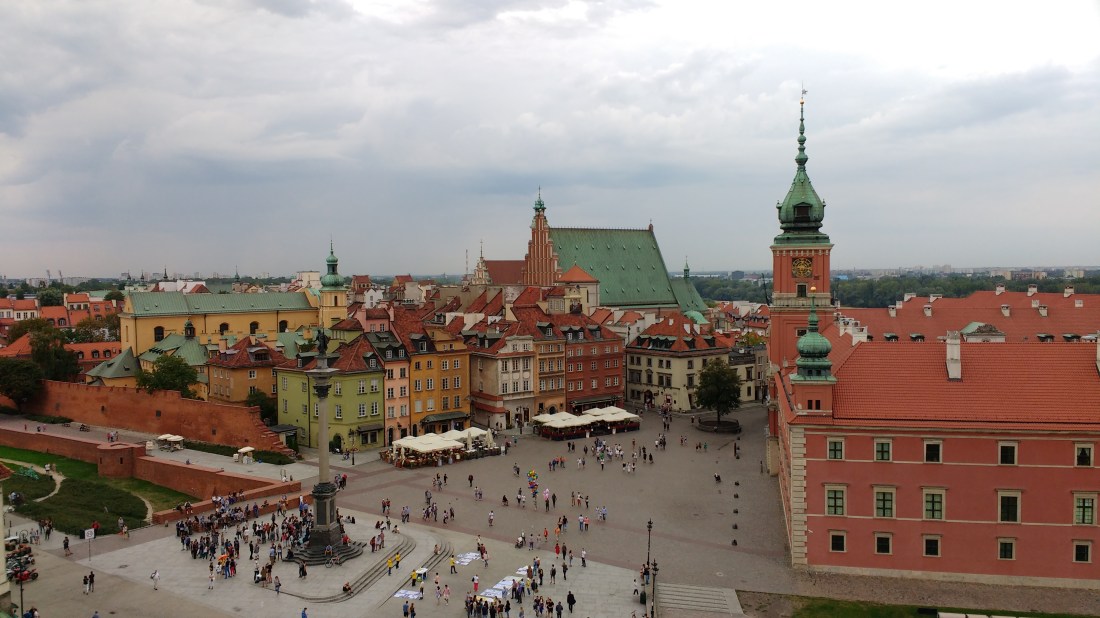
Ah, Warsaw. I spent my student years in the city and revisited recently, to attend a friend’s wedding. So, I feel somewhat qualified to give you a few tips, which will probably be interspersed with various memories from Eastern Europe of a very different era.
My first impression of Warsaw was that it had changed a great deal since I left back in… hm, was it 2005? It was definitely a lot more cosmopolitan and felt somehow warmer and friendlier (The weather, a balmy 25 degrees Celusius, may have had something to do with this).
So, what should you do in Warsaw? Two days will be enough to see the main sights.
Let’s start from the Palace of Science and Culture, which is close to the main railway station, Warsaw Central. You will be sure to see the top of the 40-something storey building from any point in the city centre. You can’t miss it:
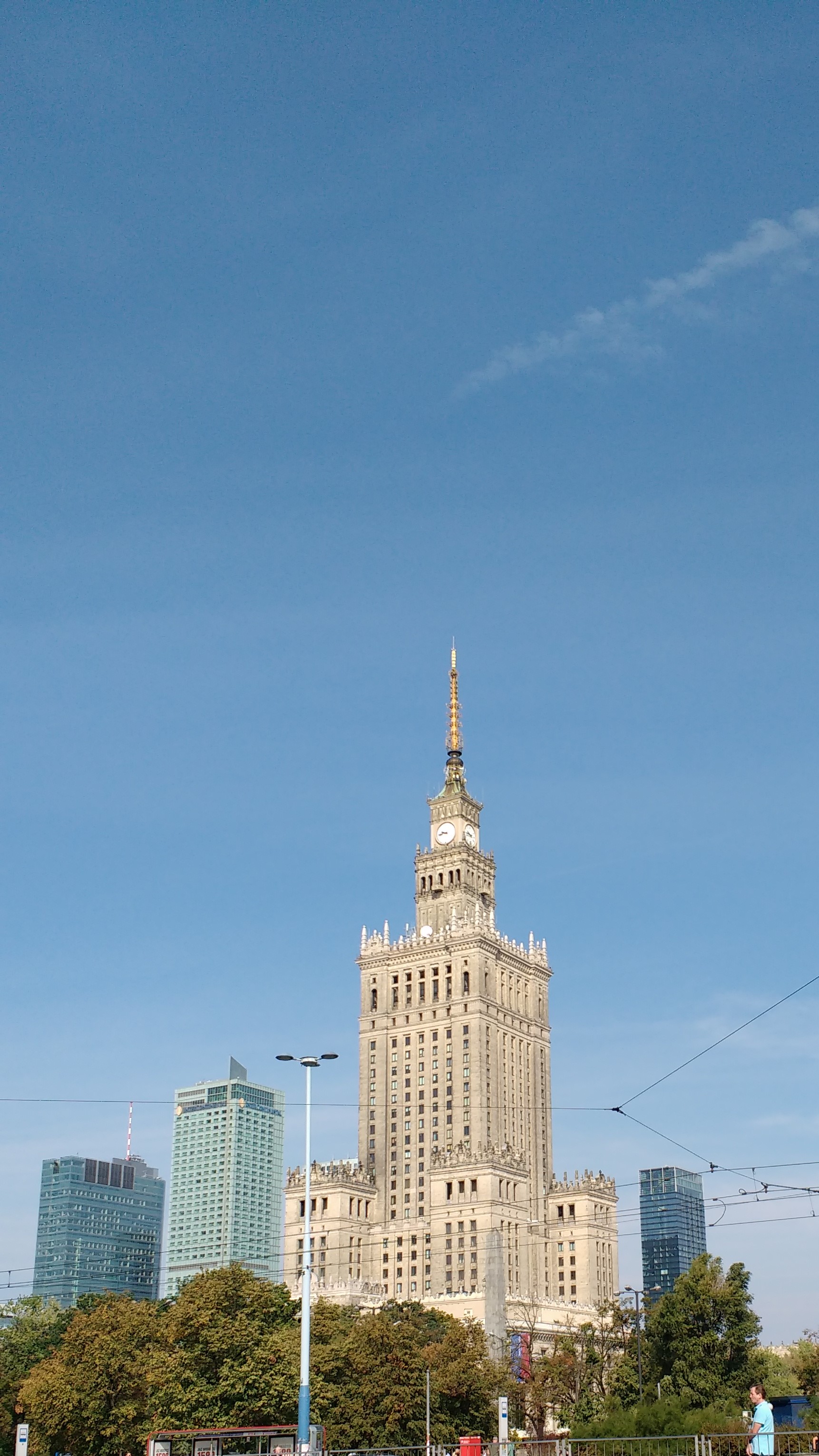
The building was modelled on the University of Moscow and was Stalin’s gift to the Polish people. Any time I look at the palace, I can’t help thinking that it could really do with a lick of paint in some cheerful colour. Perhaps it looks good on a sunny day, but when it’s cloudy, it can get a little gloomy. (Or maybe this is just my perception.) Get up to the 40-something floor, where there is a viewing platform. You’ll be able to enjoy great views of Warsaw.
When you leave the palace, make your way to the underground crossing Metro-Centrum. Find the exit marked ‘Rotunda’. Go round the round building that houses a bank and then past cinema Atlantic. You should now be on Chmielna Street – a very pleasant pedestrian-only street with many coffee shops, restaurants, beer gardens, all in or around beautiful old townhouses, painted in pastel colours and very well maintained.
Walk on Chmielna in the direction opposite to the Palace of Science and Culture. You will get to another, bigger, really pretty street, Nowy Świat (New World St.) Here, take a right; walk for 5 minutes. You will get to a major roundabout – this one:
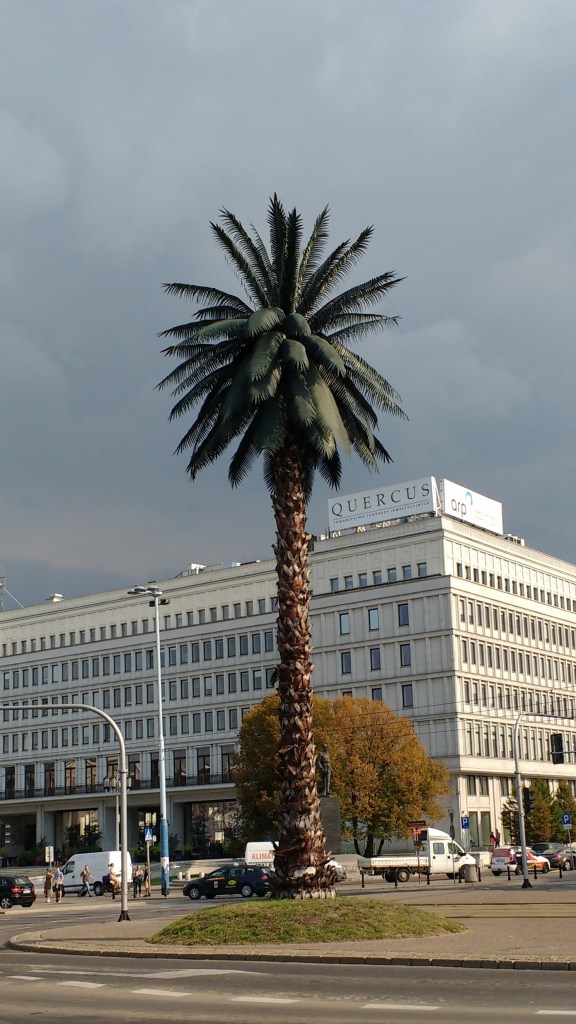
You will see the Warsaw palm tree. What, a palm tree in Poland? – I can almost hear you say. Oh, yes. It goes without saying that palms are not representative of the Polish flora. I remember the tree being… hm, should we say installed, back in the early 2000s. The rationale: commuters never ever spoke to each other, it was claimed. They apparently looked so unhappy that Polish stand-up comedians TEY famously remarked: People, dear compatriots, why are you so sad? After all, you’re going to work, aren’t you? Actually, in the Polish original, Bohdan Smoleń, a member of the band, swore, using a very typical Polish word that I am reluctant to repeat, but which, nevertheless, made these lines immortal.
And so, the palm tree was meant to make people talk. Whether it made the quiet commuters any more inclned to converse, I know not. But it certainly was a bold, controversial idea. Now, tens of thousands of passers-by probably walk past the tree every day, completely unaware of the excitement of its early days.
The palm tree should be a really useful landmark if you are unfamilar with the city. With the tree in front of you, proceed down the right hand side of Nowy Świat St, to the book shop Empik, which is on the corner of this street and Aleje Jerozolimskie (Jerusalem Avenue). Look up above the shop windows – you will see this writing carved into the stone above the ground floor windows of the shop: Caly narod bvdvje swoja stolice. – The whole nation is rebuilding its capital.
Why is this writing there? Warsaw was severely damaged in the Second World War. An initiative to rebuild the demolished Old Town, the surrounding area and other landmarks of national importance was launched after the war ended, in 1948. All people of working age nationwide were required to pay the Rebuild Warsaw tax – half a percent of their taxable income. The funds were used to carry out restoration projects across the capital and later – in other parts of the country.
From here, turn back and go up Nowy Świat, again. This the very centre of Warsaw; you will find many upmarket shops and cafes here.
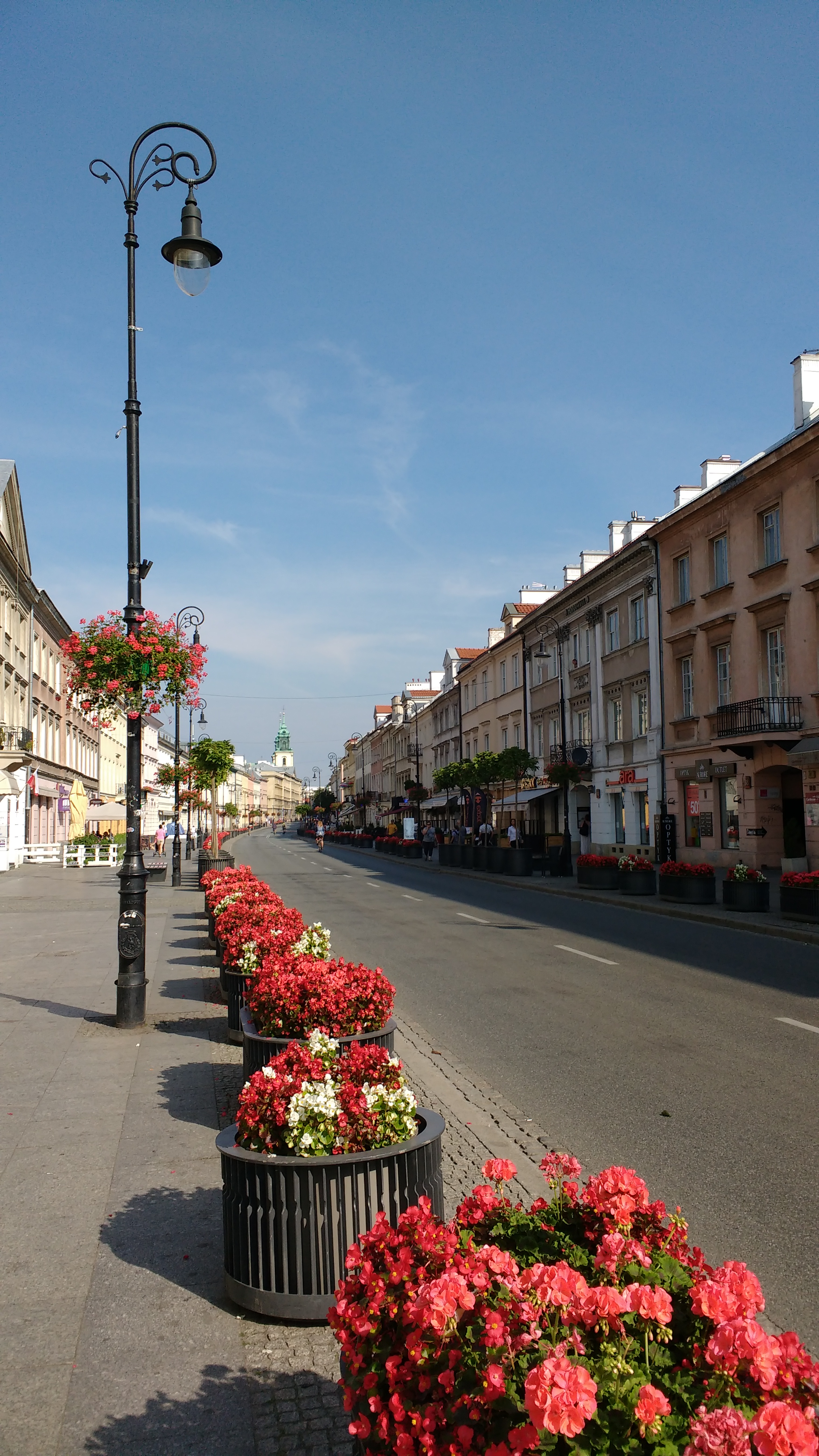
In the past, the kings of Poland passed this way when they travelled between the former capital, Kraków, and Warsaw. They would have surely stopped for a royal treat at the renowned Blikle patisserie, had it been there at the time. Locals and visitors alike come here; if you are in Poland during the week preceeding lent, come here on Mardi Gras, Fatty Thursday. This is the equvalent of the British Pancake Day, with two tiny differences: it is not on a Tuesday and the Poles eat doughnuts rather than pancakes. The classic is a doughnut with a filling of rose petals jam, glazed with icing. A word of warning: the queues may be huge on this day – but these delicious creations are worth the wait.
If you continue north in the direction of the Old Town, you will reach the crossroad of Nowy Świat and Świętokrzyska St. Here, on the right hand side, is a traffic control sign that I like a lot:
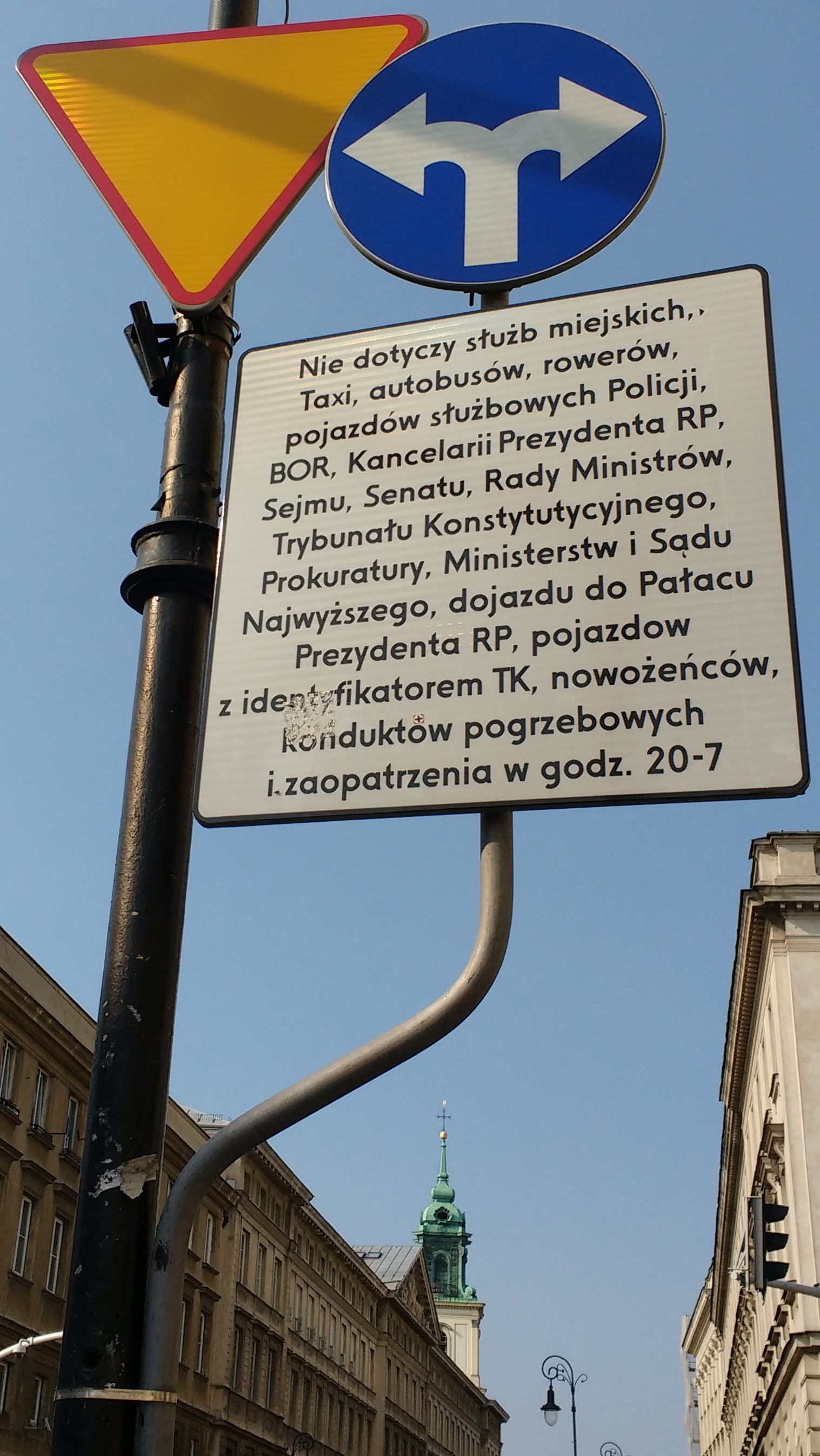
So, everyone should turn left or right, this is clear. Тhe following may proceed straight ahead: service vehicles of the municipality, taxis, buses, bicycles, police vehicles, vehicles of the Government Security Office, of the Presidential Office, of both the upper and lower house of the Polish parliament, of the Council of Ministers, of the Constitutional Tribunal, of the Prosecution Office, the Ministries, the Supreme Court, vehicles going to the presidential palace, vehicles with TK identification (not sure what this is), wedding and funeral processions and supply vehicles in the hours between 20 and 7. Wow! That’s a lot of exceptions.
When I was in Warsaw, I spotted this writing on a building near the crossing:
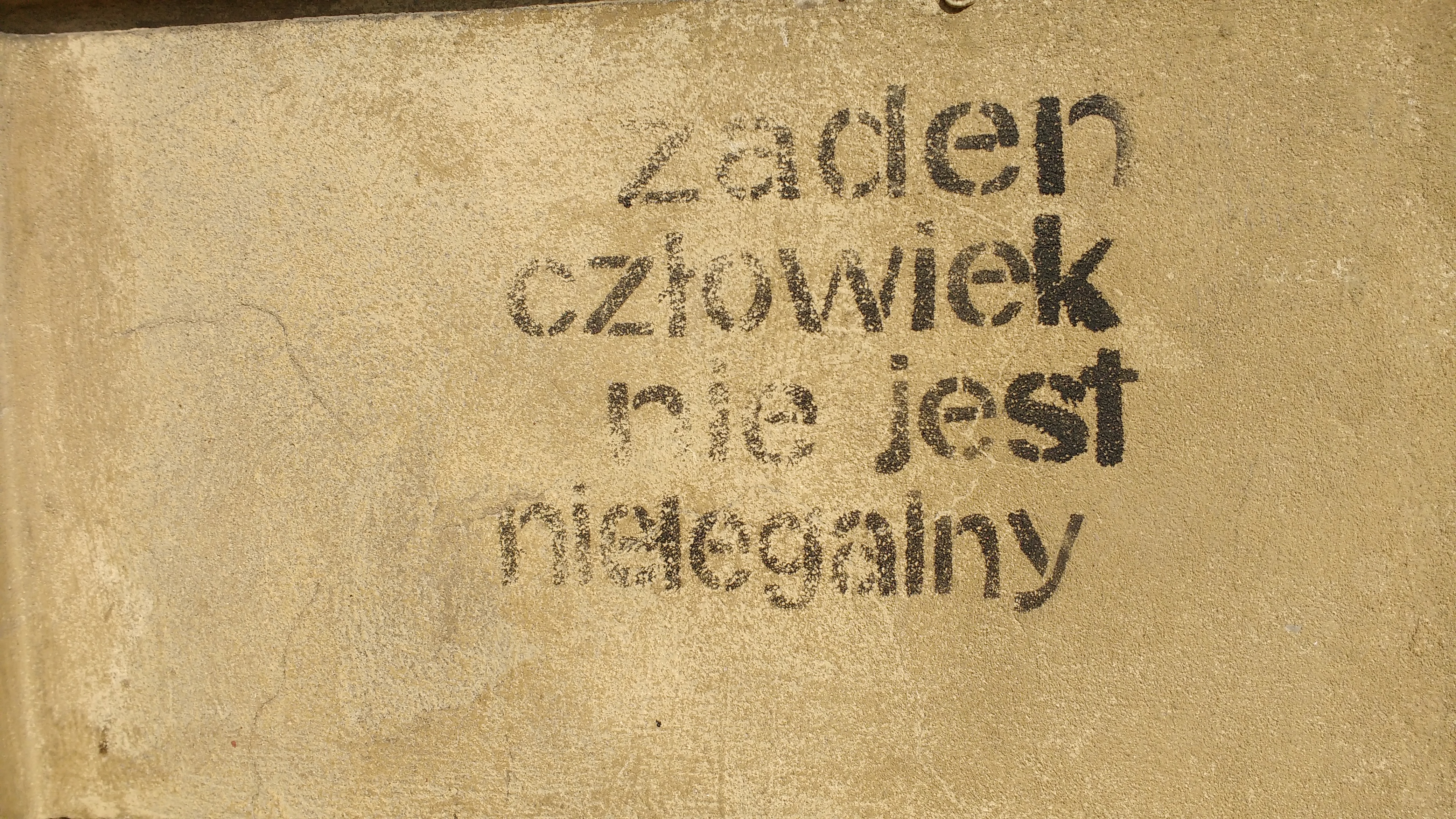
No man is illegal. Perhaps a reference to the Syrian refugee crisis of 2015, this writing brought to my mind vivid memories of collecting documents for my student’s residence permit, a painful procedure I had to repeat each year until I finally became a Polish citizen. Hooray!
If you continue straight past the traffic control sign with the numerous exceptions, you will get to the statue of Nicolaus Copernicus, or Mikołaj Kopernik in Polish, the famous astronomer, who dared suggest that the Earth revolves around the sun:
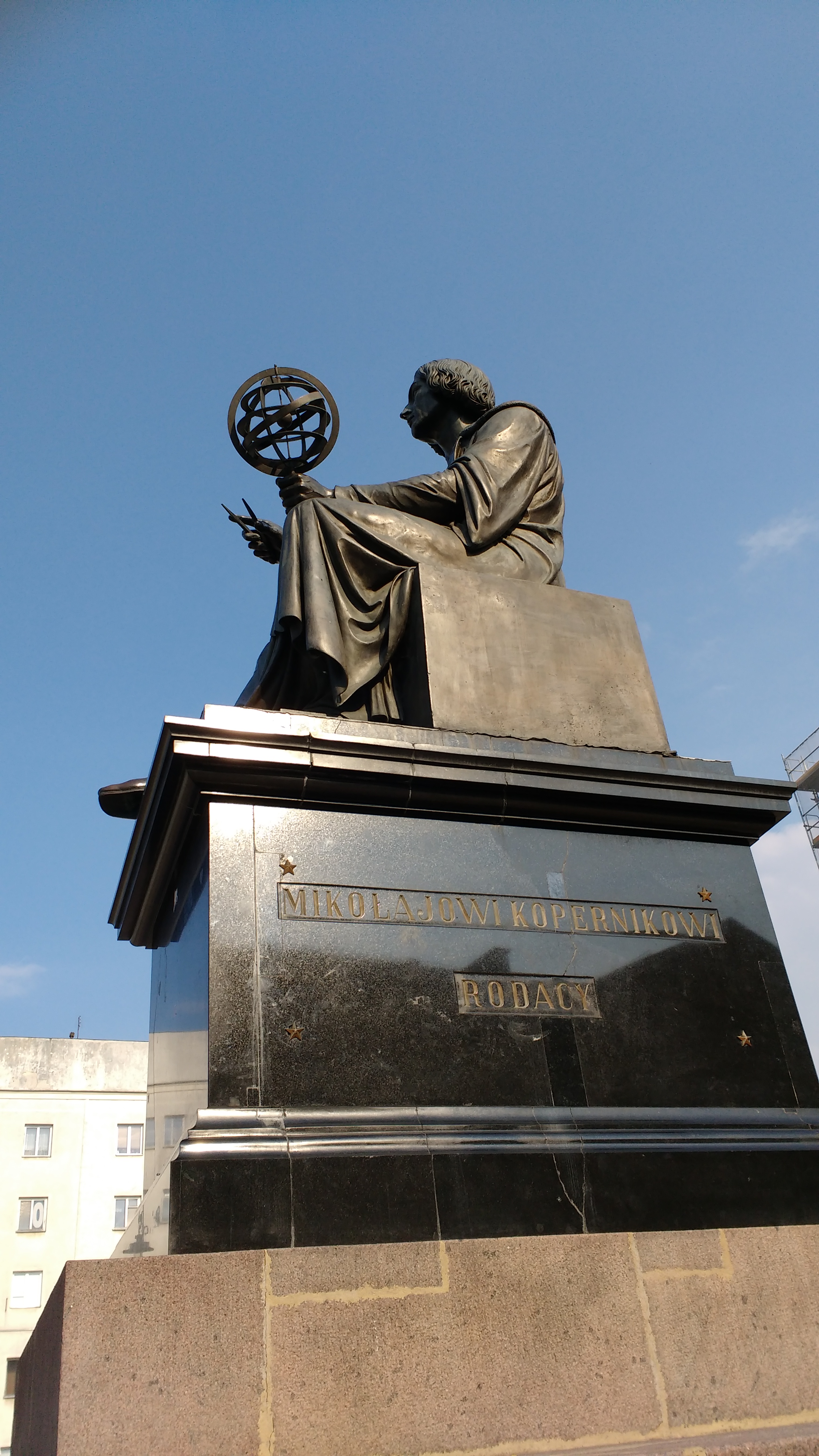
This is where New World St. ends and Krakowskie Przedmieście begins. The name of this street literally means Kraków suburbs. Whilst I am not sure of exactly how the name originated, one might venutre a guess that it could have been something to do with the aforementioned travelling of the kings between Warsaw and the then-capital Kraków. Perhaps, once outside of Warsaw, they got this happy Kraków feeling and wanted it to last.
Proceed straight round the bend and you will get to the University of Warsaw:
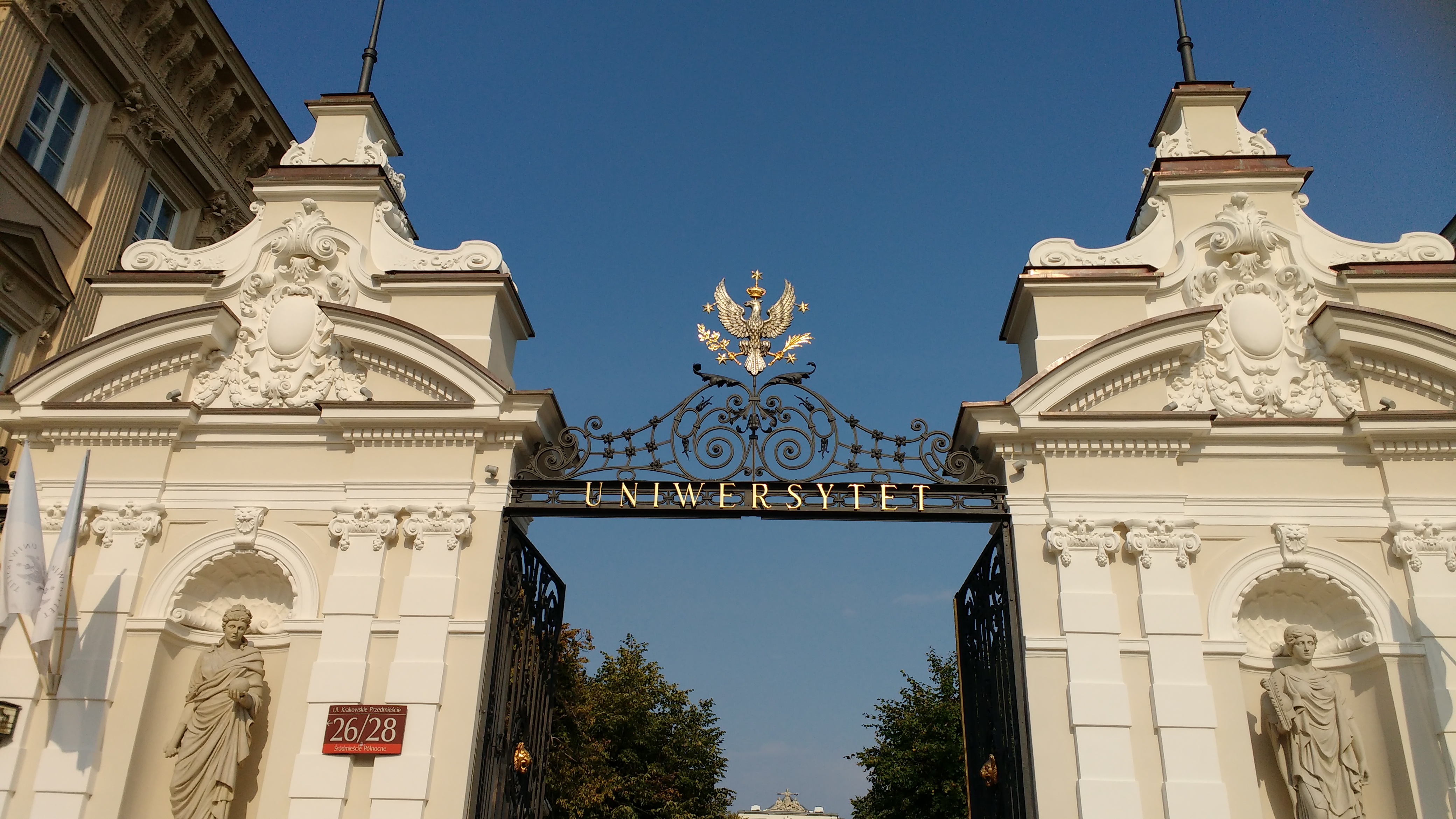
Ah, the gate! I must have walked through it millions of times. It is beautiful, really. And it’s a popular meeting point. I’ll see you after lectures at the gate. Of course, since everyone meets there, it may be hard to find one another in the crowd.
But for those in the know, there is an even better meeting spot. The milk bar (inexpensive eatery) right next door, extremely popular with students, the appetizing name of which is The Coakroach. Are we going for lunch at The Coakroach? Sure, why not? Yummy!
Milk bars like The Coakroach were a much-loved characteristic of socialist Poland. One could buy a hot meal for pennies (ok, grosze) that would be the closest thing you’d get to a homemade lunch. It is probably fitting to say that I never understood exotic local dishes such as strawberry soup. I mean, soups aren’t meant to be sweet!
It was not uncommon for the cutlery in milk bars to go missing en masse. I don’t believe it would have been of particulary high quality, but many a visitior apparently experienced an inexplicable urge to appropriate these shining tin knives, forks and spoons. The Polish classic, the film Miś (Bear) famously shows a scene of people in a milk bar, eating with cultery that is chained to the table. Better safe than sorry, is what I’ll say to that.
I am not sure of the current security arrangements with regards to entry to the university campus, but in the past, anyone could just go in and stroll around the buildings, some of which are really quite spectacular. The most spectacular of all is the rectorate – Pałac Kazimierzowski (Kazimier’s Palace). My information may be out of date, but, when I was a student, this fabulous building had a cafe that served hot drinks and food. If it’s still there, do stop for a black tea with some sugar and a slice of lemon, in a fine glass with a metal holder – the original Polish tea.
This post is getting a little long, so I will continue with the rest of my Warsaw tips in another one. Coming soon…

 Purple Travel Path